Schools Closed in Punjab: Government Enforces Strict Closure Amid Petroleum Shortage
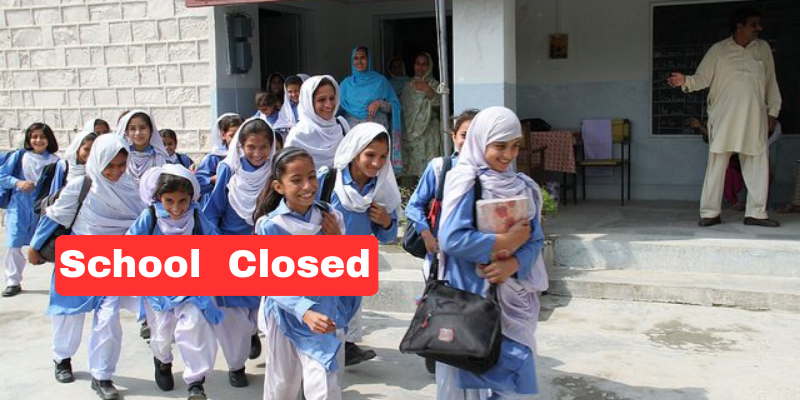
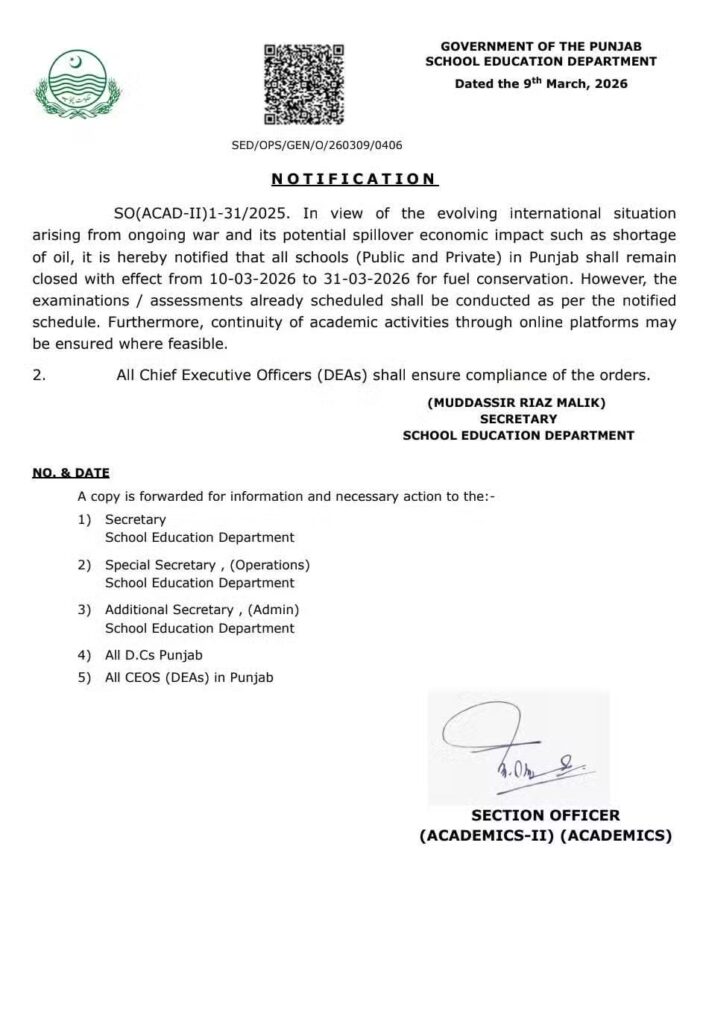
The government of Punjab has announced a major decision affecting millions of students and teachers across the province. All schools, both public and private, have been ordered to remain closed from March 10 to March 31, 2026, as part of a strict fuel conservation strategy introduced in response to the ongoing petroleum shortage.
The announcement was made under the leadership of Maryam Nawaz, the Chief Minister of Punjab, following directives linked to the broader austerity measures introduced by Shehbaz Sharif, the Prime Minister of Pakistan. The move is aimed at reducing fuel consumption across the province and managing the impact of the global energy crisis.
Education authorities have confirmed that the closure applies to all educational institutions, including government schools, private schools, and other academic facilities.
Petroleum Shortage Forces Major Policy Changes
The decision comes as Pakistan continues to face challenges related to the rising cost and limited availability of petroleum products. The government has introduced several measures to reduce fuel usage in different sectors, including transportation, government offices, and education.
Under the austerity strategy, reducing daily commuting has become a key objective. Since millions of students and teachers travel to schools every day, temporarily closing schools can significantly reduce fuel consumption.
Officials believe that this step will help the government manage the current petroleum shortage more effectively while also supporting broader economic stability.
Schools Closed Across Punjab
According to the official notification issued by the provincial government, schools across Punjab were directed to close starting March 10, 2026. The closure will remain in effect until March 31, 2026, affecting millions of students across the province.
This decision impacts a wide range of educational institutions including:
-
Government primary and secondary schools
-
Private schools and academies
-
Higher secondary institutions operating under provincial education boards
Education officials have instructed school administrations to inform students and parents immediately about the closure schedule and alternative learning arrangements.
Online Learning Introduced for Students
Although schools will remain closed physically, the government has emphasized that education activities will continue through online learning systems.
Students are expected to transition to digital learning platforms where teachers will conduct classes remotely. Schools have been encouraged to use existing online tools, video lectures, and digital assignments to maintain academic progress.
Education authorities believe that online learning will help ensure that students do not lose valuable academic time during the temporary closure period.
Teachers have also been advised to remain available for virtual support and guidance so students can continue their studies effectively.
Examinations to Continue as Scheduled
Despite the closure of schools, scheduled examinations will continue according to the existing academic calendar. Education departments have clarified that examination schedules will not be postponed at this stage.
Students will therefore need to continue preparing for their exams through online study materials and remote classes provided by their schools.
Authorities believe that maintaining the exam schedule will help prevent further disruption to the academic year.
However, officials have stated that the situation will continue to be monitored, and any necessary adjustments will be announced if required.
Work From Home Policy for Government Staff
As part of the broader austerity strategy introduced by the federal government, the plan also includes a work-from-home policy for government employees.
Under this measure, approximately 50 percent of government staff will work remotely, reducing daily travel and fuel usage across major cities.
The policy applies to several departments where remote work is possible. Government offices have been instructed to implement flexible schedules and digital work systems wherever feasible.
Officials believe that these steps will help reduce transportation demand and support the country’s fuel conservation efforts.
Alignment With Eid Holidays
Another factor influencing the closure timeline is the upcoming Eid holidays, which naturally reduce school activity during this period. By aligning the temporary closure with existing holiday schedules, the government aims to minimize disruption to the academic calendar.
This approach allows schools to reopen after the holiday period while giving authorities time to stabilize the fuel supply situation.
Parents and students are encouraged to stay updated with official announcements regarding the reopening schedule.
Impact on Students and Parents
The sudden shift to online learning may require adjustments for many families. Parents may need to ensure that students have access to internet connections, digital devices, and a quiet environment for online classes.
For younger students, parental supervision may also be necessary to help them follow their virtual lessons and complete assignments.
While some families may find online learning convenient, others may face challenges due to limited technology or connectivity.
Education officials have acknowledged these concerns and encouraged schools to provide flexible learning options whenever possible.
Education Department Monitoring the Situation
The provincial education department continues to monitor the situation closely. Authorities are reviewing both the fuel supply conditions and the effectiveness of the online learning transition.
Officials have stated that additional measures may be introduced if necessary to ensure that students continue receiving quality education during this period.
Schools are also being asked to maintain regular communication with parents and students to address any academic concerns that may arise during the closure.
Government’s Efforts to Manage the Energy Crisis
Pakistan, like many other countries, has been facing the effects of the global energy crisis. Rising fuel prices and supply challenges have forced governments to introduce austerity measures to manage resources more efficiently.
The closure of schools and implementation of remote work policies are part of a broader strategy designed to reduce fuel consumption nationwide.
Officials believe that temporary adjustments in daily routines can help the country navigate the current energy challenges more effectively.
Public Reaction to the Announcement
The announcement of school closures has generated mixed reactions among the public. Some parents have welcomed the decision, believing that it may reduce travel costs and improve safety during the fuel shortage.
Others, however, have expressed concerns about the effectiveness of online learning, especially for younger students who may find it difficult to focus during virtual classes.
Education experts emphasize that strong coordination between teachers, students, and parents will be essential to ensure that the learning process continues smoothly.
Conclusion
The decision to close schools across Punjab from March 10 to March 31, 2026 represents a major step in the government’s effort to manage the ongoing petroleum shortage. Under the leadership of Maryam Nawaz and the austerity policies introduced by Shehbaz Sharif, the province has implemented temporary changes aimed at reducing fuel consumption and stabilizing the situation.
While schools will remain physically closed, students will continue their education through online learning platforms, and scheduled examinations will proceed as planned.
As the situation develops, authorities are expected to provide further updates regarding the reopening of schools and any additional measures required to support students and families during this period.